
Emotional Wellness & Intuitive Eating
What is emotional wellness?
Emotional Wellness can be a misleading and misinterpreted term. Many people associate anything with the word emotional with intense feelings, personal vulnerability, and psychological concepts. This can lead to people feeling closed off when asked about their emotional state or well-being. Emotional wellness really means being able to notice, accept, and move through your full range of emotions using healthy coping and regulation skills. A common myth about being emotionally well is that you feel happy all the time. Many people who exist in the category of Emotionally Well are not happy all the time. In fact, I don’t know anyone who is. There are signs of emotional wellness, and we will go into detail about each of them.
5 Emotional Wellness sign examples:
- Understanding how your mood influences your choices, relationships, and ability to focus
- After a good day, how do you choose to celebrate?
- How do you celebrate a great day versus how do you soothe yourself after a bad day?
- After a bad day, how do you mourn?
- How do these shifts dictate your immediate habits (like cooking vs. ordering takeout)?
- Recognizing that stress isn’t an emotion; it’s a full-body response
- When you are feeling levels of stress, your body sends a signal to your brain
- Do you notice immediate changes in your appetite, sleep, or physical tension?
- Knowing that moods change often
- Your mood can change constantly depending on what is going on in your life
- Can you sit with a bad mood without letting it spiral, knowing that it will eventually pass?
- Recognizing how a mood can affect your whole day
- If in a good mood, how does that affect your food choices? Vice versa for when you're in a bad mood?
- If a sudden roadblock ruins your plans (stormy weather cancels your dinner plans and you have an empty fridge), how does your mood impact your next choice?
- Asking for help when it’s needed
- Asking for help is necessary to continue the betterment of yourself
- When trying a new recipe, do you hunker down and try to figure it out yourself, or do you reach out to someone for help?
What is intuitive eating?
Is...
According to Evelyn Tribole, RDN, and Elyse Resch, RDN, intuitive eating has 10 principles. They are:
● Reject diet culture
● Honor hunger cues
● Make peace with food
● Discover satisfaction
● Feel full
● Cancel food police
● Be kind to yourself
● Respect your body
● Movement
● Honor your health
Intuitive eating is used to alleviate pressure surrounding food. It offers unconditional “permission” to try different foods and see how your body feels when and after eating them.
Isn't
Intuitive eating isn’t tracking calories and measuring your weight loss obsessively. It’s implementing practices that fuel your body without restriction and overconsumption. It’s knowing when you're full, instead of feeling like you have to finish your meal. It’s knowing when to eat a snack because dinner didn’t fill you up. It’s being okay with each day looking different in relation to food. Intuitive eating can be a bit of a buzzword with the current health & wellness industry. Make sure you are reading & listening to credible sources. Intuitive eating is not to be used as a weight loss tool.

Who can help
Dietitians! Therapists! Doctors! You! In all seriousness, professionals are great resources that you can take advantage of if you are struggling. Dietitians are first in line to help you when it comes to your relationship with food; however, many people might be unsure what a dietitian is or how to get scheduled. You can contact your primary care doctor to discuss your options and see if meeting with a dietitian is right for you. A therapist might be the answer if you are struggling with personal narratives and mental health more than food itself. You are the key to your own emotional wellness, but you might need some help!
Oh! It’s also… National Vegetarian Month
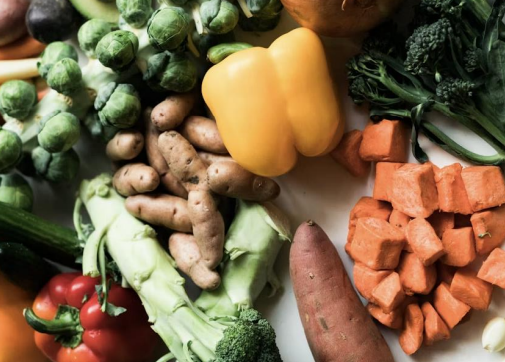
This month we are celebrating with our vegetarian friends! A vegetarian is a person who does not eat meat, poultry, or fish. A vegetarian diet can lower the risk of cardiovascular disease and type 2 diabetes, but it can lead to harmful deficiencies. If you are vegetarian, we recommend keeping track of your nutrients to make sure you aren’t becoming deficient in essential vitamins. Some vitamins vegetarians are most likely to be deficient in are vitamin B12, iron, zinc, calcium, and vitamin D. If possible, try to eat vegetarian-friendly foods that are fortified with these vitamins, in order to decrease your risk of becoming deficient.
Typically, those who partake in vegetarian diets aim to lower carbon emissions. The Vegetarian Society UK says that eating vegetarian for a year can reduce carbon emissions, as if you stopped driving a small sedan for 6 months. A vegan is a person who follows a lifestyle and diet that excludes all animal products and byproducts. It can be difficult to find recipes that are vegetarian, so we’ve compiled a big list of our favorites.
Sources: Hammam, Laila. “Emotional Wellness.” Health & Wellness, 8 July 2026, www.unh.edu/health/wellbeing-wheel/emotional-wellness.
Tribole, Evelyn, and Elyse Resch. “10 Principles of Intuitive Eating.” Intuitive Eating, 2 July 2024, www.intuitiveeating.org/about-us/10-principles-of-intuitive-eating/.
Oliveira, N. (2024, November 25). Intuitive eating • The Nutrition Source. The Nutrition Source - Harvard Chan School. https://nutritionsource.hsph.harvard.edu/intuitiveeating/
Why eat veggie?. Vegetarian Society. (2026, June 9). https://vegsoc.org/eatingveggie/why-eat-veggie/#planet
Manhattan Nutrition Clinic Blog